

-
-
Products

-
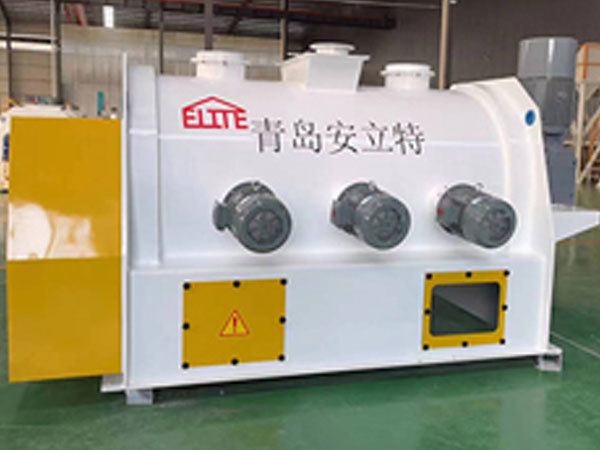


Technological Innovations and Application Prospects of Ultra-High-Performance Concrete Mixing Equipment
2025-12-16

Ultra-high-performance concrete (UHPC) has become a star material in fields such as the repair and reinforcement of critical bridge components, large-span architectural curtain walls, high-durability precast elements, and specialized protective structures, thanks to its ultra-high compressive strength—typically ≥120 MPa, with peak values exceeding 200 MPa—excellent toughness, outstanding durability (extremely low permeability and high resistance to chemical attack), and unique aesthetic appeal. However, UHPC’s exceptional performance stems from its meticulously engineered material composition—characterized by high cement content, highly active mineral admixtures, a low water-to-cement ratio (typically between 0.14 and 0.22), and high-strength steel fibers—as well as its complex preparation process. Ordinary concrete mixers simply cannot meet the requirements for its preparation. Therefore, Dedicated UHPC Mixer Its development and application have become the core prerequisite for realizing the engineering and large-scale application of this material.
I. The Strict Challenges UHPC Poses to Mixing Equipment
- The Challenge of Mixing High-Viscosity Materials: The low water-to-cement ratio of UHPC results in an extremely viscous and poorly flowable mixture. The mixing power of conventional forced-action mixers is insufficient, easily leading to dead zones in the mixing process, causing materials to clump together and form lumps, thus preventing thorough and uniform mixing of all components.
- Challenge of Uniform Dispersion of Steel Fibers: UHPC typically incorporates a large amount of fine steel fibers (with a volume fraction of 2% to 6%) to enhance its toughness. During the mixing process, it is crucial to ensure that the steel fibers are uniformly dispersed throughout the matrix without clumping, thereby preventing the formation of "fiber balls" that could compromise both mechanical performance and appearance. This places extremely high demands on the shear-dispersing capability of the mixer.
- Precise proportioning and control of the water-to-cement ratio: The performance of UHPC is extremely sensitive to the proportions of its raw materials—especially the water-to-high-performance superplasticizer ratio. The mixer must be equipped with a precise metering system and highly efficient mixing capabilities to ensure that even trace amounts of components (such as the superplasticizer) are rapidly and uniformly dispersed throughout the high-viscosity matrix, thereby avoiding localized areas that are either too dry (affecting workability) or too wet (reducing strength).
- High-efficiency production requirements: The mixing process for UHPC typically takes longer than that for conventional concrete—up to 10 to 15 minutes or even longer—and places high demands on mixing intensity. The equipment must maintain stability and reliability under high-intensity, long-duration operation while simultaneously striving to maximize production capacity per unit of time.
- Wear resistance and sealing requirements: The high-hardness materials in UHPC—such as quartz sand and steel fibers—cause severe wear on the mixing arms and lining plates. Therefore, the equipment must be made of ultra-wear-resistant materials (e.g., high-chromium cast iron, ceramic lining plates) and feature an optimally designed structure. Meanwhile, mixtures with a low water-to-cement ratio place extremely high demands on the sealing performance of the mixing shaft to prevent slurry leakage.
II. Core Technical Features of Modern UHPC Mixers
To address the challenges mentioned above, specialized UHPC mixers—typically forced-action mixers—have undergone profound optimization in both design and functionality:
- Powerful and efficient mixing principle:
- Dual-shaft forced-action mixing: The mainstream choice features two counter-rotating agitator shafts equipped with specially designed agitator arms and blades (such as spiral ribbon-type and paddle-type combinations), which generate intense radial, axial, and tangential motions. This creates complex material convection, shear, and compression, thoroughly breaking up aggregates in high-viscosity materials and achieving highly efficient and uniform mixing.
- Planetary Mixing (Partial Applications): Particularly suitable for laboratories or small-batch, high-demand production. The stirring blades rotate at high speed both around the mixing drum in a planetary motion and simultaneously spin on their own axes, generating extremely high shear forces and an exceptionally wide coverage area, resulting in outstanding mixing performance. However, this design is complex, has higher costs, and features relatively limited production capacity.
- Optimized steel fiber dispersion technology:
- Special feed sequence and timing control: Fibers are typically added in a dry or semi-dry state, and during the dry-mixing or semi-dry-mixing stage, the fibers are initially dispersed. Water or water-reducing agents are then added for wet mixing and fine blending.
- Fiber dispersion device: Some equipment is equipped with mechanical dispersing devices (such as rotating paddles or dispersing grids) at the feed inlet or in the mixing chamber to pre-disperse fiber clumps.
- Blade Shape and Rotational Speed Optimization: The design of the agitator blades (including blade angle and surface curvature) and the agitation speed (typically relatively high) generate a powerful shear flow that effectively separates and disperses fiber bundles.
- Precision Measurement and Intelligent Control Systems:
- High-precision weighing sensor: Independently and precisely measure all components, including cement, admixtures, aggregates, water, and water-reducing agents.
- Precise addition and delayed control of water-reducing agents: Water-reducing agents are typically added in batches or with a delay after the dry materials have been mixed for a certain period of time, ensuring that they are fully dispersed and achieve their optimal plasticizing effect.
- PLC/HMI Integrated Control: Implement automated, programmable control of recipe storage and mixing process parameters (time, speed, and ingredient addition sequence), as well as data logging and traceability, to ensure consistency between batches.
- Superior abrasion resistance and reliable sealing:
- Wear-resistant treatment for key components: The stirring arms, blades, and lining plates are made of high-chromium alloy cast iron, hard alloy overlay welding, ceramic composite materials, and other such materials, significantly extending their service life.
- Multi-seal system: The agitator shaft is equipped with a high-performance mechanical seal (such as a double-end-face mechanical seal) or an air seal, complemented by a lubrication system, effectively preventing leakage of high-viscosity slurries.
- Efficient unloading and cleaning design:
- Large-opening quick-discharge door: Ensure smooth and rapid discharge of high-viscosity UHPC, minimizing residue.
- Self-cleaning function / Easy-to-clean design: Optimize the blade and cylinder structures to minimize dead corners; some equipment is equipped with automatic cleaning devices (high-pressure water/air) for easy maintenance.
III. Application Scenarios and Development Trends
- Core application areas:
- Prefabricated component factory: Manufacturing high-performance prefabricated components such as bridge segment beams, architectural curtain wall panels, decorative elements, pipe galleries, and connection sections for wind turbine towers.
- Bridge Strengthening and Repair: On-site or factory mixing is used for bridge hinge joints, wet joints, bridge deck pavement, and beam reinforcement layers.
- Special Engineering: Applications with extremely high durability requirements, such as military protective structures, nuclear waste containers, and offshore platform components.
- Architectural Innovation: Ultra-thin structures, complex irregular-shaped structures, and high-performance flooring, among others.
- Development trend:
- Intelligent Upgrade: Integrate Internet of Things (IoT) technology to enable remote monitoring, fault diagnosis, and predictive maintenance; combine artificial intelligence to optimize mixing parameters.
- Energy-saving and environmentally friendly: Optimize the drive system (e.g., using variable frequency control) to reduce energy consumption and minimize dust and noise pollution.
- Large-scale and modular: Meet the needs of large-scale infrastructure projects while developing modular designs that facilitate transportation, installation, and maintenance.
- Multifunctional adaptability: The design takes into account the mixing requirements of UHPC as well as other high-performance and special concretes (such as SCC and ECC), thereby improving equipment utilization.
- Collaborative Innovation in Materials and Processes: Mixing technology and the development of new admixtures and fiber materials mutually promote each other, jointly enhancing the performance and workability of UHPC.
Conclusion:
The UHPC mixer is the key to unlocking the immense engineering potential of ultra-high-performance concrete. No longer a mere mixing vessel, it has evolved into a high-tech piece of equipment that integrates precision mechanical design, advanced materials science, and intelligent control technologies. As the application fields of UHPC continue to expand and materials technology keeps advancing, the demands on mixing equipment will only grow higher and higher. Ongoing technological innovations—particularly breakthroughs in intelligent control, enhanced wear resistance, optimized energy efficiency, and multifunctional adaptability—will drive UHPC mixers toward greater efficiency, reliability, and intelligence, providing solid equipment support for major infrastructure construction and architectural innovation. Selecting the right specialized UHPC mixer is one of the decisive factors in ensuring that the performance of UHPC materials is fully realized and that projects are successfully implemented.
Previous:
Recommend News
OUR PRODUCTS
Can't find the service you're looking for? Contact us!
To inquire about our products, please leave us your email and we will contact you within 24 hours.
Contact Us
Email:elite@elitemortar.com
Telephone:8613954270566
WhatsApp:8613061427626
Address: intersection of east Hongbo Road and Kangjian Road, Jiaozhou City
Copyright©Qingdao Elite Machinery Co.,Ltd. Powered By 300.CN | Label | Business License | Privacy Policy
